


Do you remember when?
Most of you reading this were born at the end of the Golden Era of Radio and during the infancy of television. We have lived through the Golden Era of Television. Now we are in a new frontier of media including the internet, smart phones, smart televisions, and Echo Dots. Television programs, podcasts, and social media are all watched on demand.
While I am not a big fan of all the changes, I have accepted them. My grandparents and great grandparents probably went through similar thought processes with the dawn of radio and then television. They probably missed the simple life of their youth.
I have been thinking recently of all the changes that have occurred in my lifetime. I was born in 1956. (My 70th birthday is in September. When did I grow so old?!) I remember my family getting a Sears black & white television around 1962 or 1963. We had that television until 1973, when my parents decided to buy a color television. Tubes in those old televisions could be tested and replaced when they wore out and became defective. My dad was an auto mechanics teacher at the Allegheny High School Vocational Center, on the North Side of Pittsburgh. There was a class there that taught radio and television repair. If our black & white television stopped working, my dad took it to school and, a few days later, it would return to us in working order.

I grew up in Rostraver Township which is about 25 miles southeast of Pittsburgh. Our house was halfway up a hill and faced to the south, away from Pittsburgh. Before cable television, getting good reception from television stations had a lot to do with where you lived and the topography of your area. People at the top of the hill where I lived, using a rabbit ears antenna, could easily watch all of the Pittsburgh stations (KDKA, WTAE, WIIC, WQED, WPGH) plus Altoona (WTAJ), Johnstown (WJAC), Steubenville (WTOV), and Wheeling (WTRF). At our house, using a rotary antenna, we could get clear signals from Pittsburgh stations (WTAE, WIIC, WQED) and Johnstown (WJAC). At the bottom of the hill people could only get WIIC and WTAE regardless of what type of antenna they used.
The rotary antenna at our house was connected to our brick chimney with metal straps. These straps were tightened to anchor the antenna against the elements. The antenna was hard wired to our television set. A rotary antenna is a directional and can rotate 360 degrees. It needs to be aimed at the television station’s broadcast antenna to get the best reception and picture. If the signal was weak, the picture on the television screen looked like there was a “snowstorm.” The weak signal would cause static to be seen as hundreds of white specks that interfered with the television picture. Analog television pictures were not sharp and clear like they are today with high-definition signals.
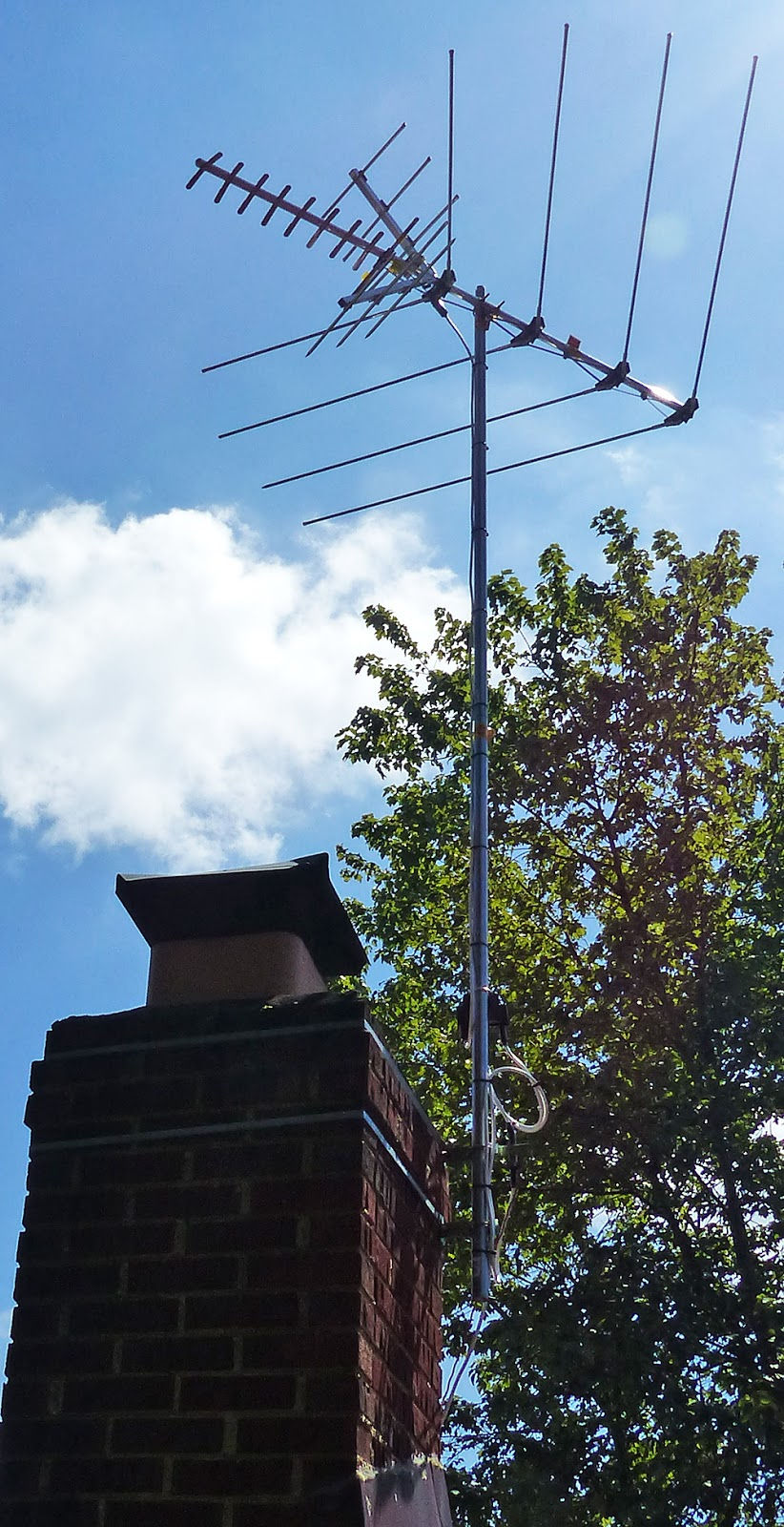
When the rotary antenna was installed, my dad turned on the television and went to each channel on the dial. Using the rotor control box, he then rotated the antenna. Using a black marker, he put markers on the dial where reception was best for each station
.
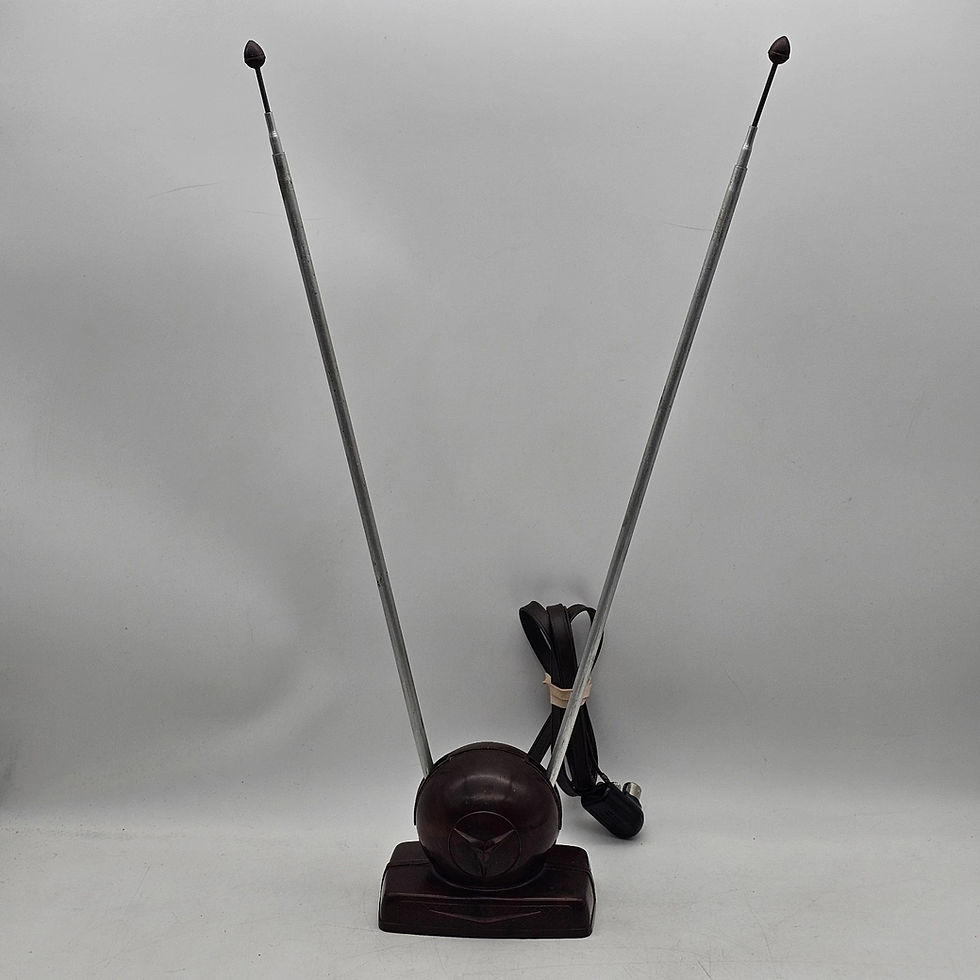
Another type of television antenna was known as rabbit ears. Rabbit ears were two long telescoping rods that could be moved independently. The rabbit ears usually sat on top of the television.
I lived in Pittsburgh when the city first got cable television. My street, Oakwood Road, was finally hooked up to cable in 1982. With cable, television reception was excellent, plus we got television stations such as WTBS (Atlanta), WOR (New York), and WUAB (Cleveland). These stations carried lots of sports for their cities. But the big thing cable television brought, for a 26-year-old, was MTV and its music videos. MTV was “must watch” television. MTV would let it be known when new videos would be premiered. I didn’t have a video tape recorder or cell phone back then. Those were in the future. So, we had to watch it live. It was fun watching the new videos and then talking about them with friends
What was television like in Indiana in the 1950s, 1960s, and 1970s? What do you remember? I am sure that many of you have your own stories to tell.


Comments